Sensors play a critical role in modern medical and healthcare systems by enabling accurate monitoring, early diagnosis, and improved patient safety. From non-contact temperature measurement to respiratory monitoring and air-quality control, advanced sensing technologies support healthcare professionals in delivering reliable, efficient, and hygienic care.
Non-Contact Temperature Monitoring
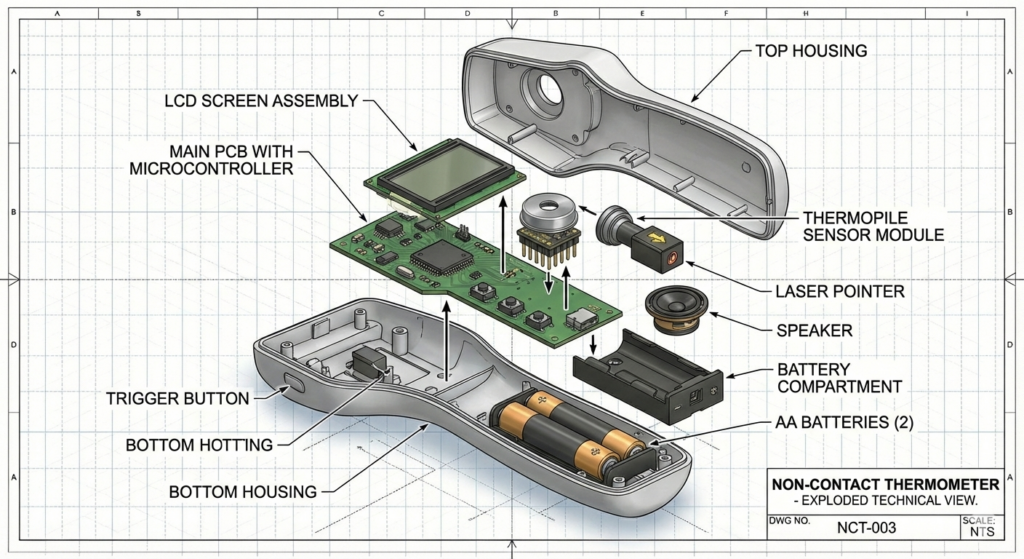
Thermopile sensors are widely used in medical devices for non-contact body temperature measurement, providing fast and accurate readings without physical contact. This capability is especially important in clinical environments where hygiene and infection control are critical. Infrared thermopile sensors enable temperature screening in hospitals, clinics, and public health settings, reducing the risk of cross-contamination while allowing rapid assessment of patients. In continuous monitoring systems, thermopile sensors support real-time temperature tracking, helping clinicians detect abnormal temperature changes early and respond promptly.
Respiratory Care and Airflow Monitoring
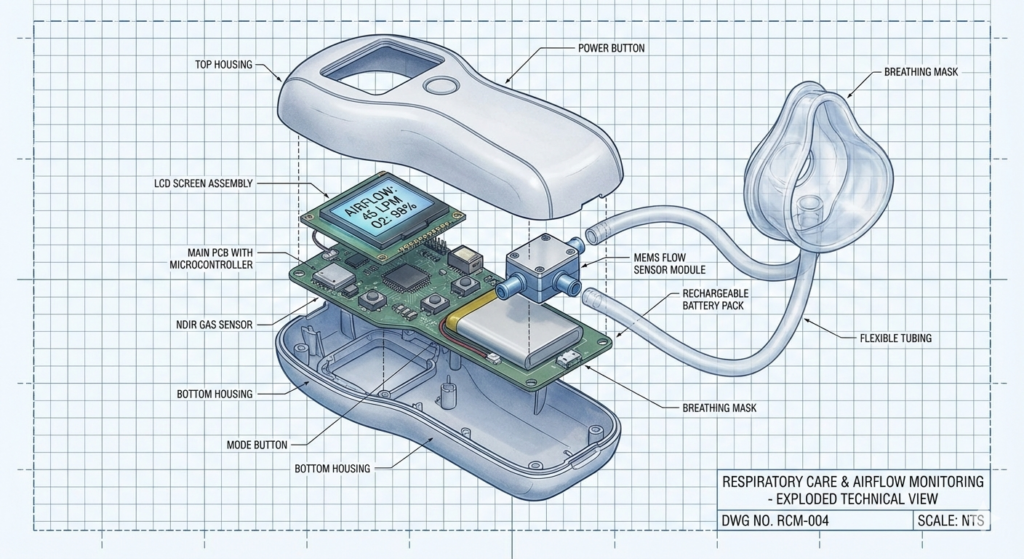
Flow sensors are essential components in respiratory equipment such as ventilators, oxygen delivery systems, and respiratory therapy devices. These sensors accurately measure airflow rates to ensure that patients receive the correct volume of air or oxygen during treatment. Precise flow monitoring improves patient comfort, enhances treatment effectiveness, and helps prevent complications caused by under- or over-delivery of respiratory gases. In critical care environments, reliable airflow sensing contributes to patient safety and supports advanced respiratory management.
Gas Monitoring for Patient Safety
Gas sensors, including CO₂ sensors, are widely used in medical environments to monitor respiratory function and indoor air quality. In clinical settings, CO₂ monitoring helps assess patient ventilation efficiency and detect abnormal breathing patterns. In hospital rooms and operating theaters, CO₂ sensors support proper ventilation control, ensuring safe air quality for both patients and healthcare staff. By maintaining optimal air conditions, gas sensors contribute to healthier environments and improved clinical outcomes.
Diagnostic Imaging and Examination Tools
Digital otoscopes equipped with imaging sensors enable clear visualization of the ear canal and tympanic membrane, supporting accurate diagnosis of ear conditions. High-resolution digital imaging allows healthcare professionals to document findings, share images for consultation, and educate patients, enhancing both diagnostic accuracy and patient engagement. These tools are increasingly used in telemedicine, expanding access to quality healthcare in remote and underserved areas.
Supporting Preventive and Home Healthcare
As healthcare continues to shift toward preventive care and remote monitoring, sensors play an increasingly important role in home healthcare devices and wearable systems. Temperature, gas, and pressure sensors enable continuous health monitoring, allowing early detection of potential issues and reducing the need for frequent hospital visits. This sensor-driven approach improves patient comfort, supports aging populations, and helps healthcare systems operate more efficiently.